Nagaland, India
When Heaven Came Down
(Part 1)
Of the 36 tribes and language
groups of Nagas in northeast India, all were deeply impacted by the light and
power of the Gospel. The miracles and signs and wonders that accompanied the
revival are so numerous that it would take a book thousands of pages long just
to begin to scratch the surface of God’s wonderful works.
Here we faithfully recount some
of the remarkable testimonies of what happened in just one church – the Sendenyu
Baptist Church in Tseminyu, Nagaland. Some
of these stories are so remarkable that you may struggle to believe they
happened, but they were witnessed by many people. Beginning in February 1959,
after several years of terrible suffering for all Naga people, the Holy Spirit
was poured out in a mighty, unexpected way upon the Sendenyu Christians. Many
lives were transformed and regenerated into the likeness of Jesus Christ.
“Suddenly a sound like the
blowing of a violent wind came from heaven and filled the whole house where they
were sitting.” (Acts 2:2)
The Sendenyu Baptist Church had
existed for many years before the events that shook the congregation in February
1959. The Christians had grown somewhat apathetic in their faith and commitment,
and many had lost their spiritual fervor. Gradually, the believers had become
more aware of their sins. Spontaneous confession of sin began to break out in
their meetings. After pouring out their souls and receiving God’s forgiveness,
their sorrow was overtaken by overflowing peace, joy and happiness.
One evening, after three
consecutive nights of special meetings, most of the believers began to leave the
church for their homes. Some Christians, however, stayed in the church and
continued in prayer and worship, sensing that God wanted to do something new in
their midst. Suddenly, a flame of fire appeared in the church in full view of
many people. It came down and settled over the pulpit at the front of the
sanctuary. The people were shocked and awestruck, as the fire was accompanied by
a mighty, loud sound like a roar. The fire divided itself into tongues of fire.
Some people immediately began to prophesy, while others saw visions. This was
the start of the tremendous visitation of the Holy Spirit among the Sendenyu
body of believers. They came to despair for their state of rebellion and
hopelessness outside of complete submission to the True and Living God. They
came to understand that their greatest acts of self-righteousness were no more
than filthy rags in the sight of God. Only Jesus Christ and the Word of God
could satisfy the deep spiritual longing felt by all.
Over the ensuing days and weeks
many people in the church stood up and, under the power of the Holy Spirit,
exposed the secret sins of church members. Accurate Bible references were spoken
that often spoke directly to the condition of a person’s heart, in a way that
only God could know. Sometimes, the prophets speaking these pinpoint Scriptural
messages were illiterate people who had never learned to read the Bible for
himself or herself. During one worship service, a church member prophesied that
God would send a pillar of fire, and that everyone must confess and repent from
their sins. He also said that the fire would burn down an unbeliever’s house
when it came. The whole church gathered together that evening and earnestly
prayed and confessed their sins to the Lord. Suddenly, a strange pillar of fire
shone above the church between 7 p.m. and 8 p.m. The light was so pure that it
was brighter than at noontime on a normal day. No reflection or shadow was cast
in any direction, however. It was unlike any other light the people had seen
before. After a short time, the pillar of fire from the Lord vanished. The
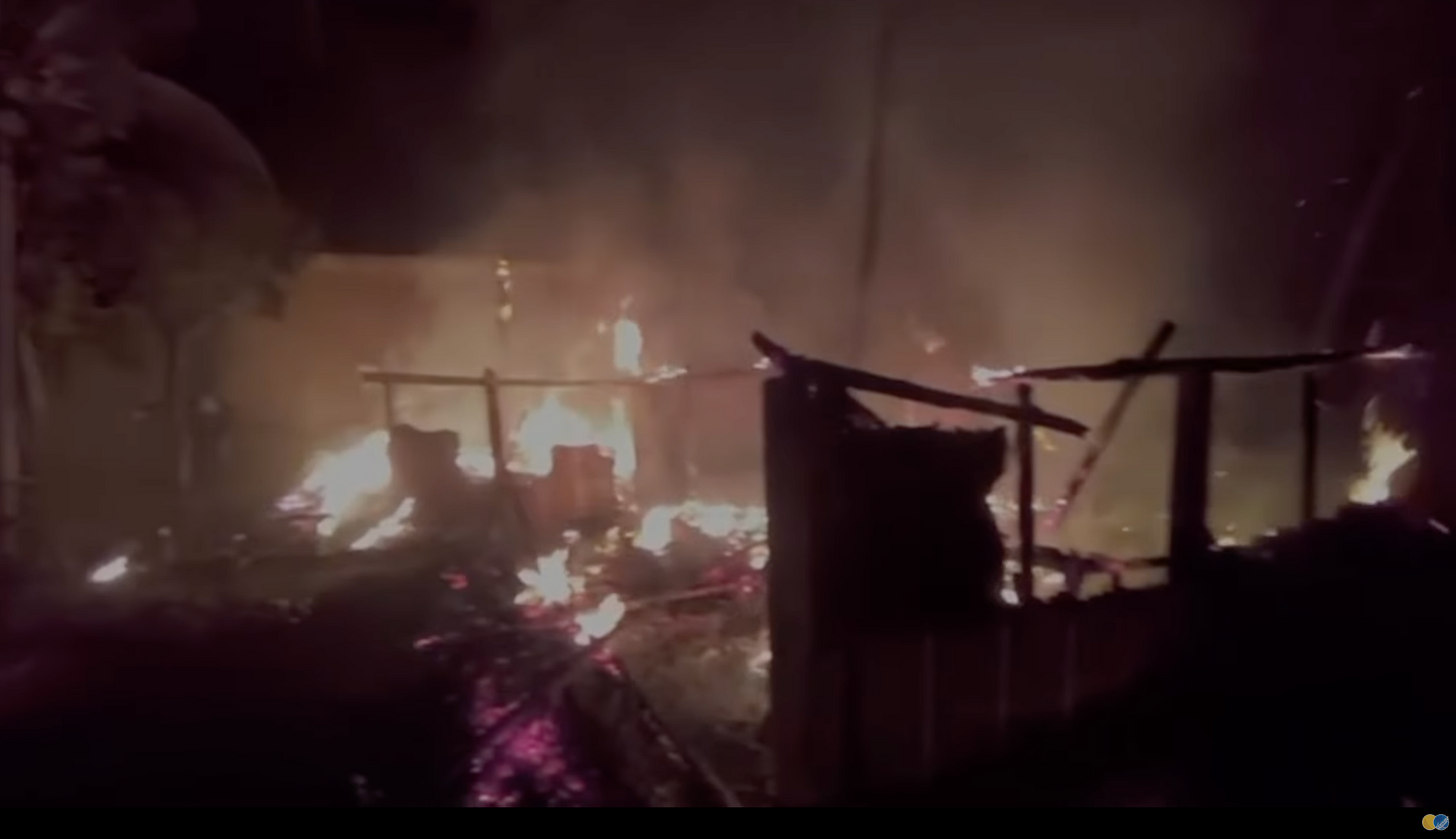
people then noticed that the house of a non-Christian named Tesinlo Khing had
caught on fire! The fire raged out of control. In those days, there was hardly
any gap between the houses in the village. The roofs were made of straw and the
walls were mats. However, in full view of the people, the destructive fire
miraculously did not spread to any of the neighboring houses owned by
Christians.
“This is the bread which the
Lord has given you to eat.... Let no man leave any of it till morning.... But
some of them left part of it until morning, and it bred worms and stank.... So
they gathered it every morning, every man according to his own need.” (Exodus
16:15,19-21)
God sovereignly undertook to
take care of His people during the famine. The believers in Sendenyu asked the
Lord to provide their daily bread, according to His Word. The merciful God
answered their prayers by miraculously providing them with a form of manna, an
edible wild creeper known locally as kenrhe. The kenrhe has large edible
roots that taste like potato. Every family in Sendenyu collected just what they
needed for that day. If anyone collected the manna for the next day, they would
not be able to eat it because it starts to stink and tastes bitter if left
overnight. This manna was eaten by the people every meal for almost one year,
until they were able to replant some of their crops. “No weapon formed against you shall prosper... this is the
heritage of the servants of the Lord, and this is their vindication from me.”
(Isaiah 54:17)
One evening in 1959, while an
evening worship service of the Sendenyu Baptist Church was in progress, soldiers
from the 7th Gorkha
Regiment of the Indian army came and surrounded the church. Inspired by the
hosts of hell, they decided to massacre the entire congregation. The troops
opened fire for several minutes, spraying hundreds of bullets into the straw
roof and walls. The building was completely filled with holes, but when the
soldiers inspected, they were amazed to find none of the believers were harmed.
Not one hair on their heads had been hurt. Confused but determined to finish the
job, the soldiers then lobbed three live hand grenades into the church. When the
Christians saw the grenades roll into the church, they immediately fell to their
knees, covered the grenades with their hands, and cried out to God for His
protection. None of the grenades detonated. Finally the Commander ordered the
use of fixed machine guns to annihilate the entire congregation. Astonishingly,
all of the bullets discharged through the chamber failed to ignite and fire. The
Gorkha Regiment, now afraid and aware that God’s hand was against them,
hurriedly withdrew back to their base, leaving the Christians alone.
An interesting side-note to this
testimony is that during their attempted massacre, the Regiment also fired their
rifles randomly around the houses of the village. That night there were four
Christian villagers who happened to be staying at home instead of attending the
worship service. The four people were Vilhoulie Kent, Yhunlonyu Kent, Alisa Kemp
and Tenyuhun Seb. As the soldiers fired indiscriminately throughout the village,
bullets hit all four people. The bullets pierced their clothes, leaving holes in
their garments, but fell down without penetrating their skin. None of them were
harmed or injured in any way!
“Submit yourselves, therefore,
to God. Resist the devil, and he will flee from you.” (James 4:7)
Near the start of the revival in
1959, not all Nagas believed in the Gospel. Many were still animists,
worshipping the spirits and demons that the ancestors of the Naga had done for
countless centuries. The Naga Christians banded together and determined to fast
and pray until the Holy Spirit removed all remaining demonic strongholds which
kept people from acknowledging the truth of Jesus Christ. In Sendenyu village,
the Christians prayed and fasted for 15 days, crying out to God and binding the
works of the devil. Three strange, yet dramatic events then took place on one
single day. Numerous people witnessed these.
Outside the village, on a hill
the Rengma tribe called “Temi Sukenko Thun” (Mount for Drying Human Flesh),
there was a large rocky cave known as Demon’s Cave, where the villagers
traditionally believed Satan roasted human flesh. On the 15th day
of the Christians’ fast, the cave simply collapsed and disintegrated, so that no
one could enter it again.
“They found the stone rolled
away.” (Luke 24:2)
On the plain between the
Nyeshweru River and the Temejochon River, there was a huge solid rock that the
local people believed was a sacred spiritual stronghold. People were afraid to
go near the rock. No one dared to even cultivate the land around the rock, for
fear of evil consequences. Local legend and experience taught that everyone who
went near the rock would return home gravely ill. Many people even died. The
rock was so large and heavy that no number of people could possibly have budged
it from its location if they had tried. It weighed many tons.
On the same day that the
Demon’s Cave collapsed, after the Christians had fasted for 15 days, the local
people were astonished to find that the huge rock on the plains had simply
disappeared! The people searched high and low for it, but no trace of the rock
could be found. It simply vanished! Today, the Nagas grow crops on the land
where they were previously too afraid to go near.
“He removed the altars to
foreign gods and the high places, smashed the sacred pillars and cut down the
wooden images.” (2 Chronicles 14:3)
During headhunting days, when
few Nagas knew the Lord, the elders of Sendenyu village planted three wild
rubber trees, known as “Chin Bin,” at the entrance to the village gate. Over the
decades, the three trees grew to enormous heights. The tops of the branches
joined together so that the three trees looked like one gigantic tree. The
villagers ascribed spiritual power to the trees, so that ancestral worship and
other rituals were conducted there. Whenever the village warriors went to war
and on headhunting expeditions, the severed heads of their victims were hung
from the branches of the tree. In their language, the locals called the tree Rupe bin which means, “Tree for hanging human heads.” On the same day that
the Lord destroyed the Demon Cave and the large rock disappeared, all three
large trees at the village gate fell to the ground with a great crash. “Do not be overcome by evil, but overcome evil with
good.” (Romans 12:21)
Go to Part 2
Return to Testimonies Page |